Companies using Netsuite with multiple subsidiaries can now use one Float account to manage all subsidiaries. Here’s what you can do with Float’s Netsuite integration for subsidiaries:
- Choose multiple subsidiaries to sync from Netsuite
- Choose a Default Subsidiary
- Assign subsidiaries to spenders and cards to automate coding of transactions to the correct subsidiary
- Track spending by subsidiary
- Export transactions to the appropriate subsidiary in Netsuite
How does this work in Float?
Before getting started, ensure the Float integrator role has access to all subsidiaries. Learn more about integrating NetSuite here.
- Navigate to Settings > Accounting Sync
- Here, you will see a list of all available subsidiaries from NetSuite (you may need to re-sync to see new subsidiaries)
- Enable the subsidiaries you’d like to use with Float.
- Choose clearing account(s) for each subsidiary.
-
You must choose one Default Subsidiary.
- This is used to code transactions if there is no subsidiary assigned to the card. You can change the default subsidiary for any spender, card, or transaction.
Spenders
Spenders are assigned to a single subsidiary, meaning their cards will also be assigned to this subsidiary.
To change the subsidiary of an individual spender:
- Navigate to Users > select the user to open their profile
- Change the subsidiary in the dropdown
- You will have the option to change all cards to this subsidiary at this time, or change the subsidiary for only newly created cards.
Cards
Cards are assigned to a single subsidiary, meaning all transactions will be coded to this subsidiary.
To change the subsidiary of an individual card:
- Navigate to Cards > Physical/Virtual > select the card you want to update
- Change the subsidiary under Card Settings
Please note: Changes to a card's subsidiary will only affect future transactions made on this card. Transactions posted prior to the change will route to the previously selected subsidiary.
Transactions
When a spender makes a transaction on their card, it will be automatically coded with the subsidiary assigned to that card. If there is no subsidiary assigned to the card, then the Default Subsidiary will be used.
A spender might spend outside their subsidiary, but you can adjust for this in the Accounting Hub.
To change the subsidiary of a transaction:
- Navigate to Accounting > Transaction Export
- Select a transaction (or use the filter to find transactions for a specific subsidiary)
- Each transaction is assigned a subsidiary according to the card used. You can change this subsidiary with an Administrator or Bookkeeper role in Float.
- Click Export to export the transaction to the correct subsidiary in NetSuite
Reporting
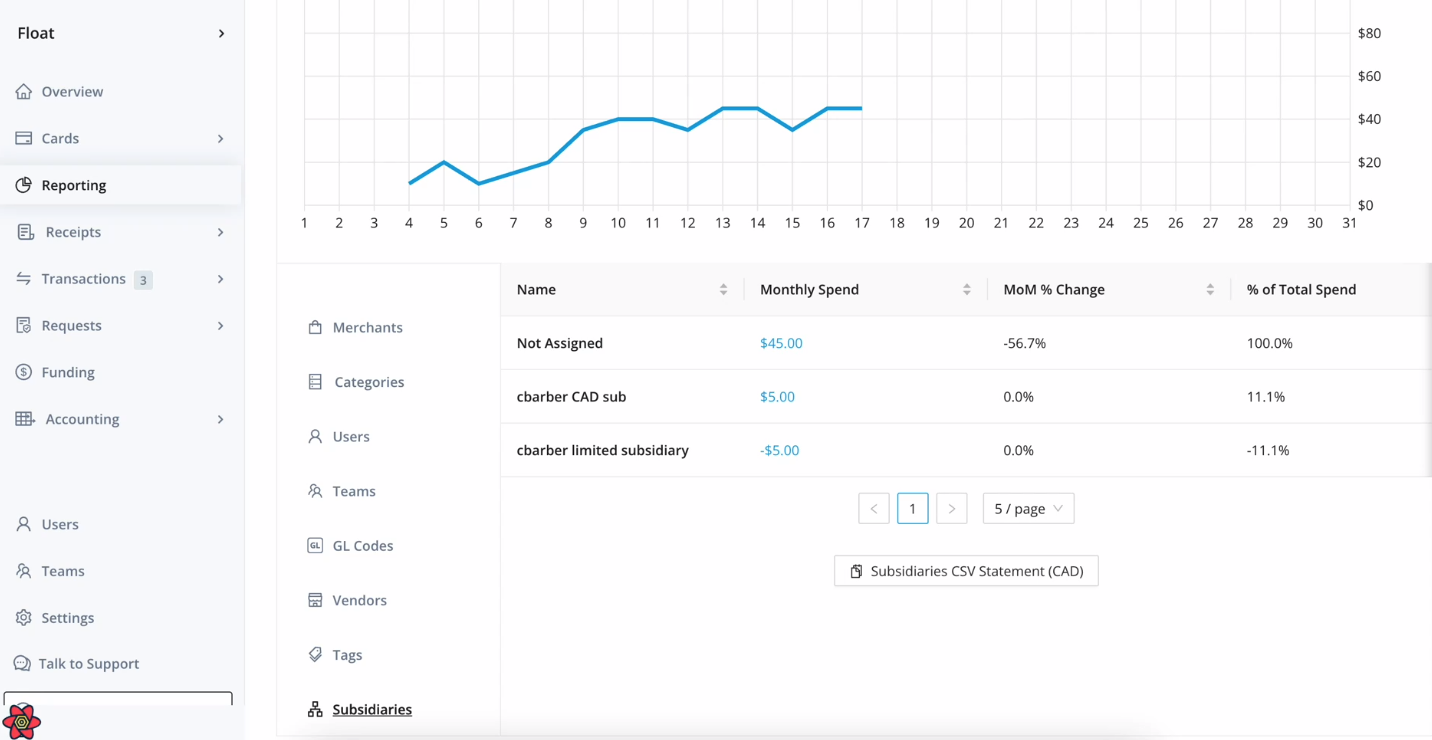
In the Reporting section, you can get a breakdown of spend by subsidiary.
Frequently Asked Questions
What do I do if a spender makes a transaction outside their assigned subsidiary?
You can adjust the subsidiary of the transaction in the Accounting Hub, as long as you are an Administrator or Bookkeeper in Float.
Each of my subsidiaries has a different funding source. Can I link those in Float
Not at this time. This will be a future enhancement to this integration. Please let us know if this is your situation by emailing support@floatfinancial.com so we can learn more.
I have a lot of users and/or cards to manage, can someone help me update these?
Yes! Please reach out to support@floatfinancial.com and we’ll assist you with these updates.